
Cómo probamos cada máquina de hielo antes de embalar
Compartir:
-

-

-

-


Copiado
Compartir:
-
-
-
-
Copiado
Un análisis paso a paso del manejo de refrigerantes, Verificación de refrigeración, Detección de fugas, corrective action and electrical safety testing
For an ice maker, El rendimiento fiable se determina mucho antes de que el cartón esté sellado. The refrigeration circuit must be correctly charged and closed, the machine must produce ice under controlled conditions, every potential leakage point must be checked, and the electrical system must pass its required safety tests.
At Yumyth Cooling Appliances Co., Ltd., every ice maker completes 100% in-line testing before it is released for packaging. This process gives our OEM and ODM customers clearer production traceability and helps prevent avoidable refrigeration, performance and electrical issues from reaching the market.
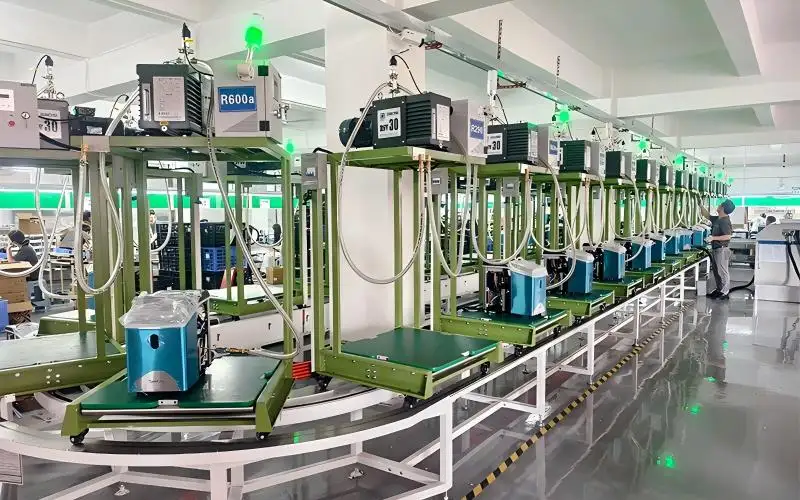
1. Refrigerant Charging Under Controlled Production Conditions
The refrigeration system is charged with the specified amount of refrigerant at a dedicated workstation. Correct charging is essential: too little refrigerant can reduce cooling efficiency and slow ice production, while an incorrect charge can place unnecessary stress on the system. Operators follow the approved model specification and process requirements for each production batch.
2. Closing and Securing the Refrigeration Circuit
After charging is complete, the process connector is cut and the joint is sealed by brazing. This is a critical workmanship step because the closed joint must remain secure during transportation, installation and long-term operation. The connection is visually checked before the unit proceeds to the next stage.
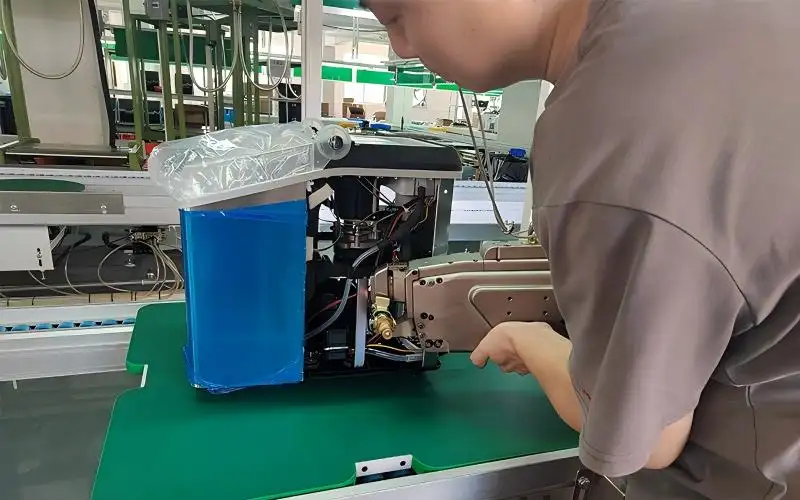
3. 100 Percent Ice Making and Cooling Performance Verification
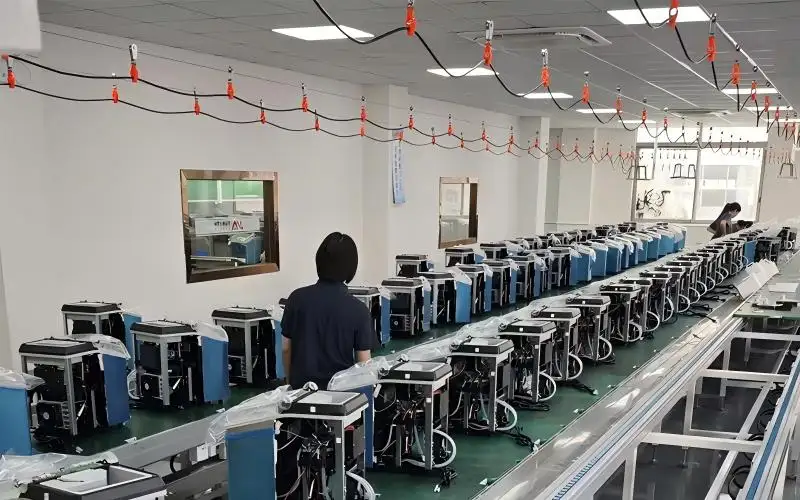
Every completed unit is connected and operated on the production line. We do not rely only on component inspection or sample testing. The actual machine must run and demonstrate its refrigeration and ice-making performance before it can move forward.
During this stage, the production team checks operating response, cooling behavior and ice production. Testing the finished machine as a complete system helps identify assembly or refrigeration issues that cannot always be detected by inspecting individual components alone.
4. Multi-Point Refrigerant Leak Detection
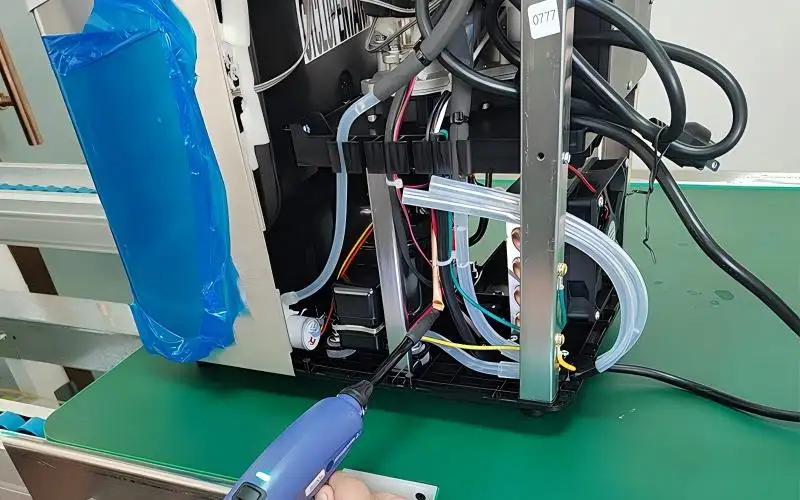
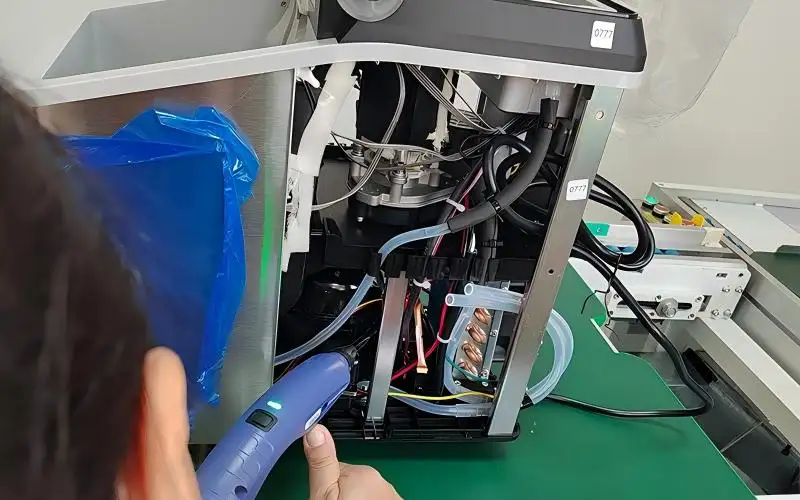
A refrigeration system may initially cool even when a very small leak is present. That is why operating performance and leak detection are treated as separate quality-control steps. After the circuit is closed, technicians inspect the relevant tubing, joints and refrigeration connections for signs of refrigerant leakage.
The checks shown below cover multiple positions inside the machine. Using more than one inspection point reduces the risk of overlooking a weak joint or connection. A unit that does not meet the requirement is isolated from normal production flow.
5. Recording Nonconformities for Traceability
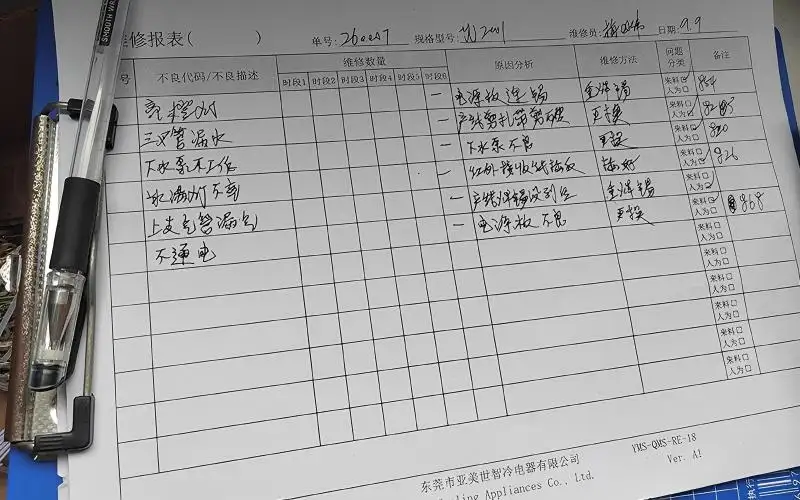
When an abnormal result is identified, it is recorded rather than informally passed down the line. The production inspection record documents the detected issue and supports follow-up by quality and engineering personnel. These records also help the team review recurring defects by model, batch or process stage and take corrective action where needed.
6 On-Site Diagnosis and Corrective Repair
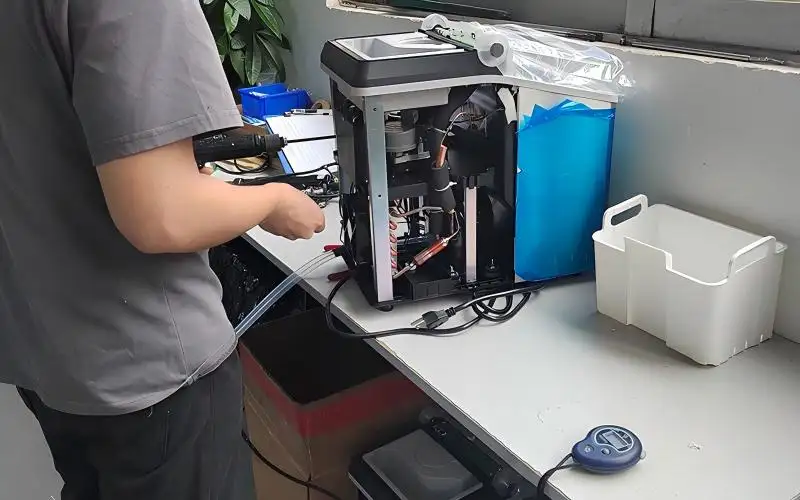
Units with an abnormal test result are held for diagnosis. An engineer checks the machine at the production site, identifies the cause and completes the necessary correction. The unit is not released simply because a repair has been made; it must return to the applicable inspection stage and pass the required test again.
7 Electrical Performance and Safety Testing
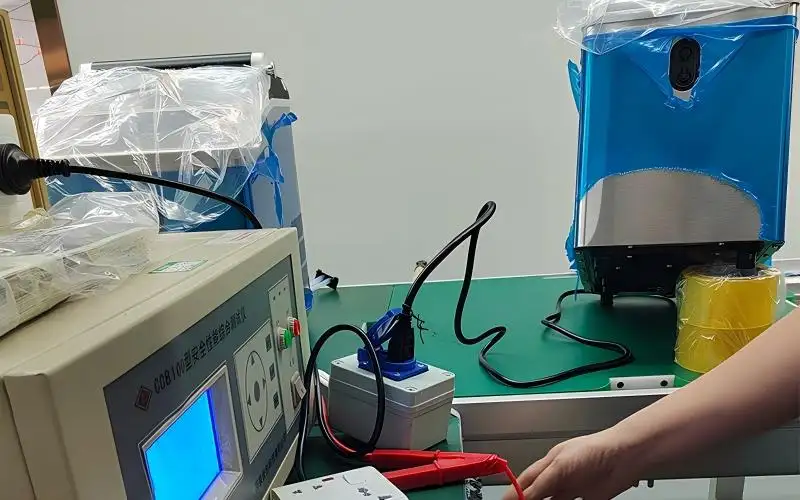
Refrigeration performance is only part of final product quality. Every unit also undergoes electrical testing before packaging. The test confirms that the machine operates within the defined electrical requirements and provides an objective pass or fail result for the production team.
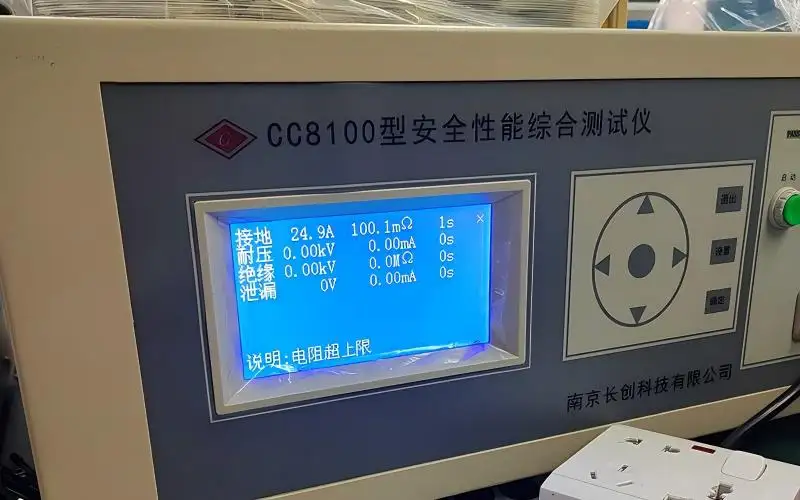
A high-potential, or Hi-Pot, test is also used to verify electrical insulation strength and help identify insulation breakdown or unsafe leakage paths. The applicable settings and acceptance criteria are controlled according to the product and market requirements.
Only Tested Units Move to Packaging
Packaging is the final release point, not a substitute for inspection. An ice maker can enter the packaging stage only after the required in-line checks have been completed and the unit has passed refrigeration performance, leak detection and electrical safety testing. Units requiring correction are repaired, rechecked and released only after they meet the applicable requirements.
Para importadores, distributors and private-label appliance brands, this process provides more than a finished product. It supports consistent batch quality, clearer issue tracking and a more reliable basis for long-term OEM and ODM cooperation.
OEM and ODM Ice Maker Quality Support
Yumyth Cooling Appliances Co., Ltd. supports OEM and ODM projects for nugget ice makers, cube ice makers, slush machines and ice cream machines. Testing requirements, Registros de inspección, packaging standards and market-specific electrical requirements can be aligned during project development. Contact our team to discuss your product specification, target market and quality-control requirements.
Artículos relacionados
Cómo probamos cada máquina de hielo antes de embalar
2026-09-15
POR YUMYTH
Un análisis paso a paso del manejo de refrigerantes, Verificación de refrigeración, Detección de fugas, Acciones correctivas y pruebas de seguridad eléctrica para una máquina de hielo, El rendimiento fiable se determina mucho antes de que el cartón esté sellado. ...
Guía para marcas que buscan un proveedor OEM fiable de selladores al vacío
2026-09-14
POR YUMYTH
Cuando adquieres electrodomésticos de cocina para tu marca minorista, Encontrar un proveedor OEM fiable de envasadores al vacío rara vez se trata solo de conseguir el precio unitario más bajo. Se trata de proteger....

Por qué importa la forma del hielo: Comprender el hielo cilíndrico de pepitas de 10 mm × 15 mm
2026-09-14
POR YUMYTH
Más que la producción de hielo — el propio hielo moldea la experiencia del consumidor al adquirir una máquina de hielo nugget, Los compradores suelen centrarse primero en la capacidad de producción, Tamaño del tanque de agua, Cesta de hielo....

Guía de búsqueda de máquinas de hielo: Cómo encontrar la fábrica adecuada
2026-09-10
POR YUMYTH
Conseguir una máquina de hielo parece sencillo sobre el papel. Encuentra un proveedor, acordar un precio, Hacer un pedido. Pero cualquiera que haya hecho esto sabe que el proceso rara vez es....